writing

Mendocino and Writing- Part 1

Before the Conference

In my wildest dreams, I never expected to attend the 2024 Mendocino Writers’ Conference. The price was out of my budget, and I knew Mendocino lodging was expensive. But, as it were, the cards fell into place and told the story. I received a great deal because the conference price had been discounted, and the first inn I called in Mendocino had a private two-story vacation rental that was part of a bigger historic 1800’s home in town. As it turns out, the venue for the conference was a five-minute drive across the freeway from where I would be living for the next three days. It all seemed too good to be true, and I waited for the other shoe to drop. 

When I signed up for the conference, I had to choose a workshop that was to take place every morning from 9 a.m. to noon. Because I had signed up just three weeks before the conference, most of the workshops were filled so I chose Speculative Fiction.

Easy breezy, lemon squeezy, I was ready to go!

Wait, not so fast!

I quickly learned that being a part of a workshop at this conference meant I had to submit a piece of speculative fiction, with a word limit of 6,000 words. I also learned that I had to read nine other speculative fiction stories at least twice and submit a one-page paper outlining the plot, what I like about the story, and any questions or confusing parts.    

Now, anybody who knows me knows that I often take things literally and that I am exact when it comes rules, guidelines, and the like. Well, in order to follow the rules I needed to know what I was dealing with. 

I researched the definition of speculative fiction and Google provided a general definition of “a genre of fiction that encompasses work in which in which the setting is other than the real world, involving supernatural, futuristic, or other imagined elements.”  This definition was not exact enough, so I dug deeper and discovered from Wikipedia that speculative fiction is an umbrella for subgenres such as science fiction, horror, fantasy, and the supernatural.

Well, I was around 40,000 words into my supernatural novel, so I decided to submit the first two chapters of my novel.  Up until a few days before the deadline to submit, I reworked the first two chapters until I thought the premise was clear, the characters were fleshed out, and there were plenty of visuals to keep my audience engaged. 

The afternoon before the conference, I maneuvered my little white Toyota through the majestic redwoods until the misty fog and the ocean air met me with open arms.  As soon as I reached the village of Mendocino, I checked into my private vacation rental and immediately fell in love with its charm: the clawfoot bathtub, the wood floors painted yellow, the old electric stove, the all too steep stairs that led up to a loft with the bed and a writing desk overlooking the pond in the yard. 

That night, with the fresh ocean air whispering through the open windows, I worked on my novel at the writer’s desk in the bedroom loft. As I typed away on my laptop, Jack London and Wolf House and John Steinbeck and his waterfront writing studio came to mind. While a writer can create masterpieces anywhere, there is something magical about having a special place to write without too many disturbances. 

The night before the conference, I went to sleep early so, the next morning, I could take my time getting ready. At 8 a.m. as I walked through the conference doors, I felt much like I did on my first day of high school;  a little scared but glad to be embarking on a new experience, with both shoes still on my feet.

Be on the lookout for Part 2, which will be all about the conference. 

General Writing · Journeys · storytelling · Time management · writing · Writing and Family

Writing, But Not What I Expected

I did not expect to fall in love with ancestral writing.  This type of prose differs from memoir but has many of the same elements- a snapshot of the ancestor’s life with an inciting event that leads to a conclusion. The beginning and ending are linked with a unique phrase or concept. However, whereas memoirs are generally book-length, ancestral pieces are generally shorter. 

Ancestral stories are intentionally void of non-fiction. You can certainly add impressions of what could have happened or elements of your own introspection, but it must be clear what is fact and what is not. 

So far, I have written about my paternal second great-grandmother who helped establish Cordell, Oklahoma, a paternal second great-grandfather who was a prominent farmer in Oklahoma, and great-grandmothers on both sides of the family who died young from disease and forever changed the lives of their infant sons. I continue writing these family stories and sharing them with my ancestral writing group created by our local genealogical society.  I have some exciting characters in my blood family!

That said, I have not accomplished much lately with writing fiction.  Now, being on a two-week staycation from my paralegal work, my goal is to redistribute my schedule so that I can do some serious writing each day.  I will not be picking up old unfinished work, some of which might not ever see the light of day.

I have decided a new beginning is what I need now.    

Today, I started working on a new novel using an idea that I have been chewing on over the last few days. 

A novel with a catchy title and twists and turns in the prose.  Unusual elements become characters in least expected ways.

A thriller with elements of my life of living at a lake—real life events slathered with embellishment to push readers to the edge of wherever they happen to be.    

Like I said, I love ancestral writing, but I have also missed writing fiction. 

Carry on, keep writing.    

blogging · discipline · General Writing · goals · Marketing · Time management · writing

Time Management: It’s All About the Time You Already Have

TIME MANAGEMENT

The many years I worked full-time it was easy scheduling time to write. I would pencil in my lunch break or the few hours before bed, and I would tell myself that I could put in some extra writing hours on the weekends too.

It took me awhile to learn that scheduling time to write and the act of writing were two different things, especially with a stressful job that required periodic overtime. I often ended up relaxing at lunch instead of writing, and on most overtime days I was too tired to fire up my computer in the evening.

Sometimes I could get some quality writing time in on the weekends, but that was only if I was not suffering from low motivation after working all week. Because I had created poor time management habits, and I was allowing myself to become stressed and overtired in my job, my writing suffered and I eventually shelved my works in progress for extended periods of time.

In July of 2017 everything changed. I got laid off from my full-time job and found myself with nothing but time on my hands.

While applying for unemployment, looking for work, setting up my own business as a notary public and loan signing agent (which included building a website, researching the market, and doing online marketing), getting my condo ready for rental, and preparing for a long-planned move to another county, I suddenly found myself inundated with work.

This thing is that I’m still ultra-busy dealing with being laid off and moving, but I’m sitting here right now writing this article for my blog.

The difference between then and now is that my writing no longer sits in the back seat. I have chosen to put my writing in the passenger with my notary and signing agent work because I love them both so much.

My attitude about how to manage my time has also changed. I don’t have to make time for the things I love to do, I just need to utilize the time that I already have.

The reason that I could not see my writing opportunities before is because I was allowing stress and dissatisfaction to take over my life.

Things are looking better for me every day.  I have been doing temporary work when available and landing some notary and signing gigs.

And, I’m still finding time to write.

I have been earning a little money from writing content and pitching to companies that need writers.

Tomorrow I will work on a guest article for a writing friend’s blog, and I will begin working on an article I have been hired to write for a magazine. After the gym, I will fix my oatmeal with fruit, make my mocha, and work on these articles while I eat.

Oh, and I’m back at working on my first novel again-making changes and killing little darlings, as the saying goes.

Every day is a new day and reveals how much time I will have to write—and, there is always time.

blogging · Change · discipline · General Writing · goals · writing

Placeholders (Places You Have Been)

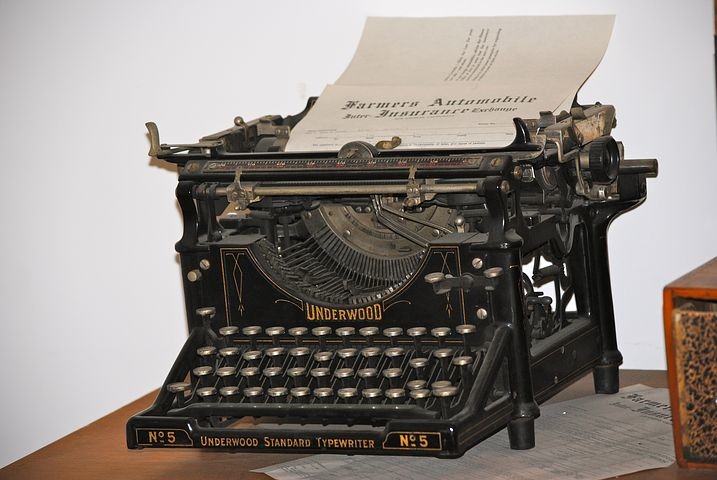
1 TYPEWRITERMy grandparents owned an old Underwood typewriter that my mother used in school during the fifties, and her four sisters used in the sixties and seventies. It was old, durable, and downright tough against all the fingers that tapped its’ keys to complete many a school paper.

When I was twelve years old and announced that I wanted to be a writer, my mother bought me a pink typewriter for Christmas. I don’t recall if it was a Royal or Olympic, but I do recall typing stacks of my handwritten poems onto onion paper to create a booklet for my mother.

That pink typewriter lasted through junior high and high school and has always been a well-remembered placeholder symbolizing when I first became serious about writing.

In fact, placeholders are important to remember as we walk our journey to success because they tell us where we have been and where we are going, and let us know when we have reached our destination.

Where You Have Been

One of the most important things to remember is where you come from. Even if right now you’re churning out novels, stories, or articles left and right and making a living writing, chances are you didn’t start that way. You started where all writers start and faced rejection, and more rejection, probably until you were ready to give up.

For example, Dean Koontz sold the first short story he wrote then received 75 rejections before selling anything again.

Stephen King said that by the time he was fourteen, his rejection slips hung heavy from a nail on his wall. When the nail would no longer hold the rejections slips, he replaced it with a spike and went on writing.

It’s clear these two prolific writers never forgot where they came from and, despite the odds, they kept moving forward.

Where You Are going

It’s important to have a clear picture of where you are going.

If you want to be a writer, then you must write and keep writing. You must use a pen and paper, or open a word processor, and you must write, and keep writing.  To do this, it’s a good idea to:

1. Find a quiet place to write
2. Open notebook or laptop, or engage typewriter or desk top computer
3. Cut our all distractions
4. Put butt in chair and write for a specified amount of time each day

If writing isn’t your thing but law is, then you must go to law school and make sure your activities revolve around law. A lawyer never starts off as a lawyer, even if their dad or mom, or uncle, practiced law.

If you want to be a nurse or doctor, you must first complete educational requirements. You don’t just start off as a nurse or doctor, you take steps toward working in your chosen profession.

As you take each step toward where you want to be, keep in mind the path that is helping you travel toward your goals. Each place you have been holds purpose and intention.

Where You Want to Be

Finally, there is that moment in life when you reach the place you want to be. Perhaps you finished law school and decided to practice elder law, or you earned your RN and became an emergency room nurse.

If you had not stuck out all the prerequisites in college to get into law school, or endured all those late-night nursing, you would not be doing what you had set out to do.

Or, after years of enduring rejection slips, you finally sell that story or novel, that leads you to writing more novels and becoming a midlevel or bestselling author.

Had you let those rejection slips knock you down, you would not have met with success so many years later. You would not have reached your goal of honing your craft and finally selling your work.

If I remember correctly, my grandparents donated that old Underwood to the local historical society. As for me, I don’t remember what happened to that old typewriter, but the clickity-clack of the keys in motion is forever embedded in my memory.


blogging · Change · discipline · goals · writing

Believe in Your Worth

board-2433978_640

When was the last time you really believed in yourself, when you were sure of your accomplishments and where you were headed in your life?  A time when you, without a single doubt, believed in your worth? 

If you’re like most people, including me, you have trudged through difficult times when you didn’t see value in your work.  Maybe you were working at a unfulfilling dead-end job or you just could not figure out what you wanted to do. 

The bottom line is that you need to know your own worth in order to succeed in your chosen profession, whether it be a traditional or entrepreneurial career.  How much, or how little, you value your skill set determines how you present yourself to others in the business world. 

Knowing your worth is especially important if you are self-employed because incoming business determines whether you make a profit. For example, if you are a freelance writer proposing low rates for projects just to get your writing out there, or you think nobody would pay you higher rates, then you are selling yourself short.  

You may get less writing opportunities if you quote higher rates, but it’s guaranteed that you will more quality ones.  In my book, quality always wins over quantity.

Knowing your worth requires seeing the value in your skills, putting yourself out there, and going after what is important to you. It means believing in yourself and not giving up even when you face slow times, or even rejection. 

Believe in yourself. don’t give up, and you will realize your own worth.